


What Learning to Fight Taught Me
About Dentistry

“Every area of confidence was once an area of fear.”
Self-improvement can come in unique forms for all of us. Since I began my journey into amateur Silat martial arts, the experience has offered me fascinating parallels between the dental profession and combat training. The experience enriched me in ways I could never have anticipated.
What is Silat
Martial arts often serve different purposes, from self-defense to spiritual development to competitive sport. Mixed Martial Arts (MMA), for instance, is primarily seen as a competitive sport, a combination of various disciplines where the objective is to outperform an opponent within set rules and regulations.

Brazilian Jiu-Jitsu (BJJ), on the other hand, focuses on ground fighting and submission holds, often involving joint-locks and chokeholds that, if applied with full force, could break bones or incapacitate an opponent. Silat, however, has a different focus.
This traditional Southeast Asian martial art form was initially developed in an environment where self-defense could mean the difference between life and death. Therefore, Silat often emphasizes lethal strikes and movements aimed at neutralizing an opponent as swiftly as possible. The fighting style was designed to kill.
In a modern setting however, the ultimate objective of Silat, like many martial arts, remains self-improvement, discipline, and respect for the power one wields.
Beginner’s Mind
As the dentist in a dental practice, we are expected to have all of the answers and to never make mistakes. When I entered into Silat training I had none of the answers, was a total novice, and made mistakes all the time. I continue to make mistakes. This was a massive change of pace from what I was used to in my daily life.
By adopting the mindset of being a beginner, we remain open to new information and experiences, promoting growth and continuous learning. This concept was central to my journey into Silat, which was entirely new territory for me.
As a seasoned dentist, I entered the world of Silat as a novice. There was no place for ego. Ego is often an impediment to learning and growth, but the Beginner’s Mind encouraged me to let go of mine, clearing the path for new knowledge and experiences.
What was fascinating was how this Beginner’s Mind began to permeate other aspects of my life, including my dental practice. I found myself revisiting foundational concepts, questioning routines I had taken for granted, and exploring new approaches to both clinical and business aspects of my work. The Beginner’s Mind encouraged a revitalization of my practice and brought forth an invigorated sense of enthusiasm and innovation.

In the context of Silat, having a Beginner’s Mind forced me to be more attentive, to learn faster, and to adapt quickly to an unfamiliar environment. It fostered a mindset of constant learning, curiosity, and resilience, skills that proved beneficial beyond the training mat.
Training in Silat was not merely about learning a new martial art form; it was about embracing the mindset of a beginner and allowing that to reshape my approach to life and work. As Shunryu Suzuki famously stated, “In the beginner’s mind, there are many possibilities, but in the expert’s mind, there are few.” My journey into Silat thus echoes this sentiment, underlining the profound wisdom that lies in the heart of a beginner.

Adaptability

When Charles Darwin produced the theory of evolution, he made a salient point about survival. It isn’t the strongest or most intelligent species that perseveres, but the one most adaptable to change. This insightful observation echoes true, not just in the wild savannahs or dense jungles, but within the dojo of Silat and the sterile confines of a dental clinic.
In the dynamic world of Silat, adaptability is everything. A practitioner cannot merely rely on strength or a set sequence of movements; they must constantly adapt to their opponent’s actions. Or get punched in the face…or worse.
This constant dance of adaptation and response is fluid, reflective of the practitioner’s mental agility and strategic prowess. They must gauge their adversary’s next move, discern their strategy, and alter their technique in the blink of an eye. There is no room for rigid strategies or inflexible tactics. Instead, success lies in an ever-changing dance of attack and defense, a testament to Darwin’s observation about survival and adaptability.
Parallels of this adaptability are strikingly evident in the field of dentistry. Just as a Silat practitioner must adjust their techniques in response to an opponent’s actions, a dentist must remain flexible to the evolving dynamics of their profession and within the walls of their practice. The world of dentistry is in a state of constant flux – new research insights, innovative technological advancements, changing patient needs, shifting market trends, and evolving regulatory guidelines. A dentist, much like a Silat practitioner, cannot afford to be rigid or resistant to change.
Similarly, changing patient expectations require adaptability in patient communication and service offerings. Patients today expect more personalized and convenient care, which necessitates an adaptive and responsive approach.
My training in Silat has been instrumental in honing this skill of adaptability. It has imbued me with a sense of fluidity and flexibility, both in thought and action. It has reinforced adaptability is not just about survival, but also about thriving in a changing environment. Just as I adapt my movements in response to my opponent in Silat, I have learned to adapt my dental practice in response to the ever-changing landscape of dentistry and of my business.
Adaptability, therefore, isn’t just about responding to change; it’s about anticipating it, embracing it, and leveraging it for growth and improvement. Whether on the training mat or in the dental clinic, it’s about dancing with change and making it your ally, much like the species that have stood the test of time in Darwin’s grand theory of evolution.
Want to Build a Leaner, Clearer Practice?
Browse our free tools and webinars designed to help dentists simplify operations, understand their numbers, and build a better practice with more clarity.
Open the Free Resource LibraryOvercoming Fear/Anxiety
The battle against fear is as old as humanity itself, and the ability to conquer it is a trait shared by successful individuals throughout history. Whether it’s bracing oneself against a punch in Silat or facing the uncertainties of running a dental practice, fear remains a constant distraction that needs to be overcome for achieving success. Both in Silat and business, the key lies not in the absence of fear but in learning to navigate it.
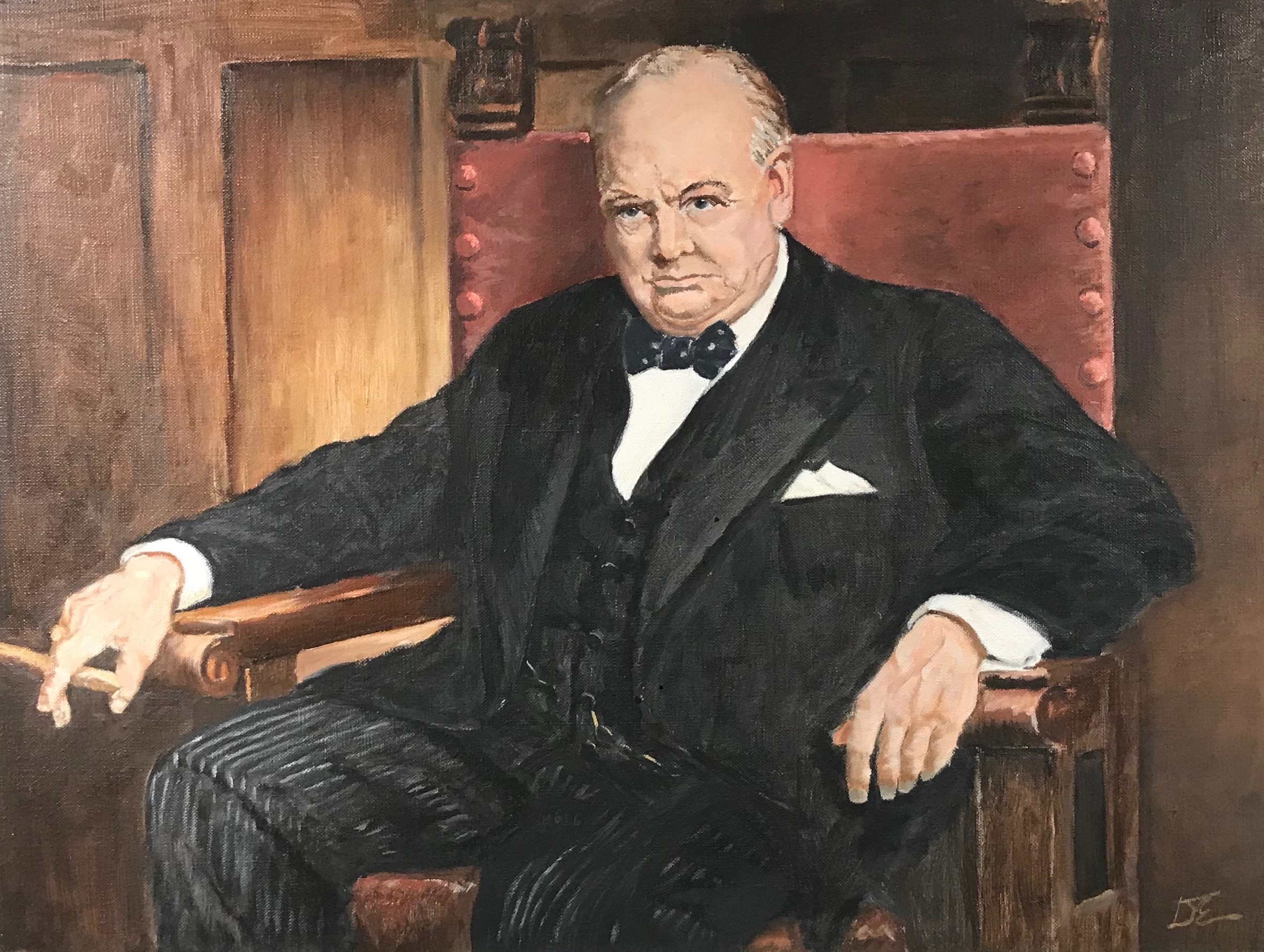
One historical example that stands out is that of Sir Winston Churchill, the indomitable British Prime Minister during World War II. Churchill led Britain through one of its darkest hours, facing relentless bombings, dire resource shortages, and the overwhelming might of the German war machine. The prospect of a disastrous defeat was real and frightening. Yet, Churchill’s steadfast leadership, despite his own fears and the nation’s apprehension, instilled hope and resilience, eventually leading the country to victory. His famous words, “Fear is a reaction. Courage is a decision,” echo the lessons I’ve learned in my Silat training.
In Silat, fear is an integral part of the training process. Every practitioner fears the incoming punch, but it’s the way one handles this fear that makes the difference. Letting it cloud your judgment only leads to the outcome you’re afraid of. However, acknowledging fear and using it as a cue for heightened focus and awareness transforms it from a distraction to an enabler. This critical shift in perception is what enables a Silat practitioner to effectively defend against and counter an opponent’s attack.
This same principle applies in the realm of running a dental practice. Fear – of competition, failure, or financial loss – is a natural part of the entrepreneurial journey. But, like Churchill in the throes of war or a Silat practitioner in the midst of a fight, it’s the decision to act courageously despite fear that leads to success. Fear can be a catalyst for change, driving innovation, improvement, and risk management in the practice.
One of the transformative effects of becoming a trained martial artist, is the shift in your relationship with fear. As my training progresses and my skills develop, I continue to understand my own capabilities better. The power of my own body and mind, the effectiveness of my techniques, and my ability to respond quickly and effectively to threats. This understanding, in turn, affects the perception of fear. Even as a novice, I know that I possess fighting skills that the average person does not.
However, it’s important to note that being a trained martial artist doesn’t eliminate fear completely, nor should it. Fear still serves as a vital alert mechanism, a signal to remain alert and cautious. Yet, its once paralyzing grip gives way to a controlled alertness, guided by training and discipline. The fear doesn’t disappear entirely, but its role transforms from an intimidating barrier to a useful, manageable tool. It becomes a controlled fire, providing light and warmth instead of causing destruction.
Fear, therefore, should not be seen as an obstacle but as an instructor. It is a signal for greater attention, a challenge to be surmounted, and an invitation for growth. It is through acknowledging and navigating fear that one can truly embody the spirit of Silat, the courage of leaders like Churchill, and the resilience necessary for a successful dental practice.
These lessons have enhanced my dental practice and my life as a whole. As I continue my exploration of Silat, I look forward to discovering and sharing more insights that this martial art has to offer.
#StayLean

Stop Training Dental Assistants From Scratch
Every dentist knows the pain of hiring someone with potential, but no system for turning that potential into a useful, confident dental assistant.
Dental Assistant Bootcamp was built to give your new or inexperienced assistant a structured training path — so they can learn the language, rhythm, expectations, and workflow of a real dental office.
Explore Dental Assistant Bootcamp

